Clay-soil assessment
Visible structure, compaction, infiltration, standing water, lawn condition and existing drainage are reviewed.

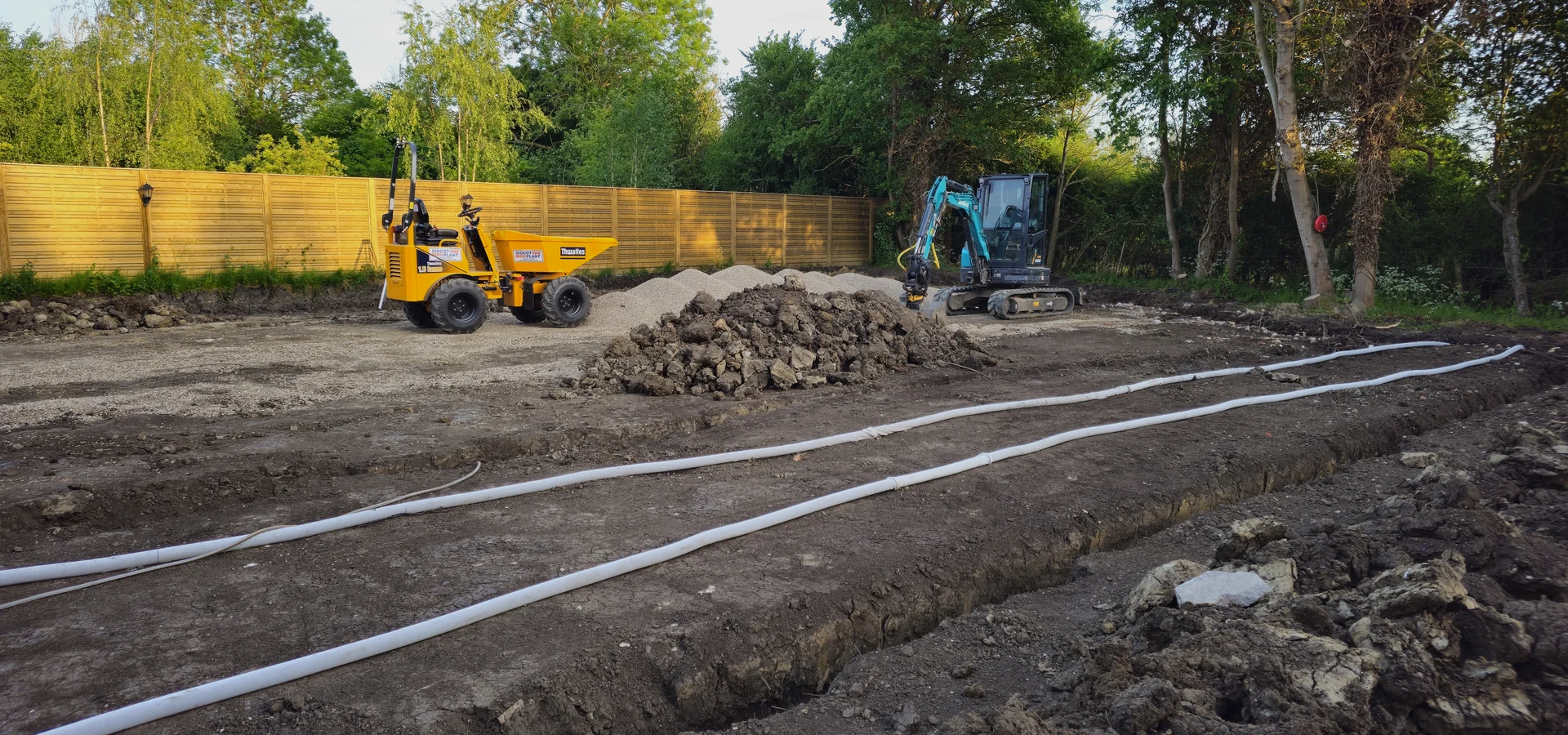
Long-term soil restructuring for compacted clay, poor infiltration, weak lawns and water that remains close to the surface.
In suitable projects, DesignLeaf uses APAM in a controlled, site-specific proportion together with lime and compost. The materials are mechanically incorporated through the affected soil layer rather than applied only to the surface.
Depending on access, services, root zones and the condition of the subsoil, treatment may be worked to depths of up to approximately 500 mm. The objective is to improve aggregation, reduce compaction and create more effective routes for water and roots.
Improvement develops over time. In suitable conditions, infiltration and water movement may improve by as much as approximately 80%, but no fixed result can be guaranteed without site-specific testing and assessment.
The treatment is designed around the real soil profile rather than sold as a universal surface product.
Visible structure, compaction, infiltration, standing water, lawn condition and existing drainage are reviewed.
APAM is used only in an appropriate controlled proportion and incorporated according to the treatment design.
Where suitable, lime supports soil chemistry and aggregation while compost adds organic material and supports long-term improvement.
The soil can be worked through a substantial depth where the site allows, rather than treating only the upper few centimetres.
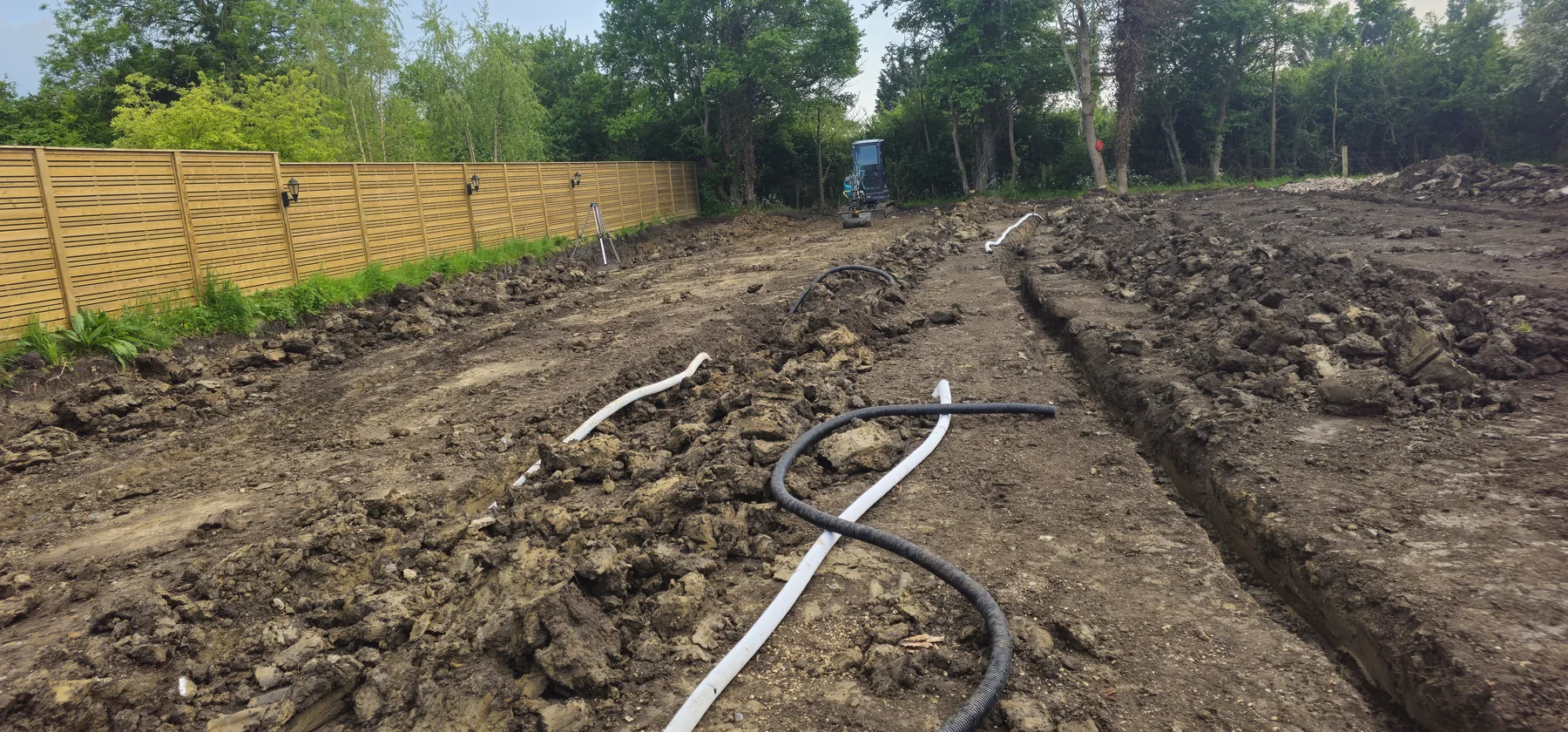
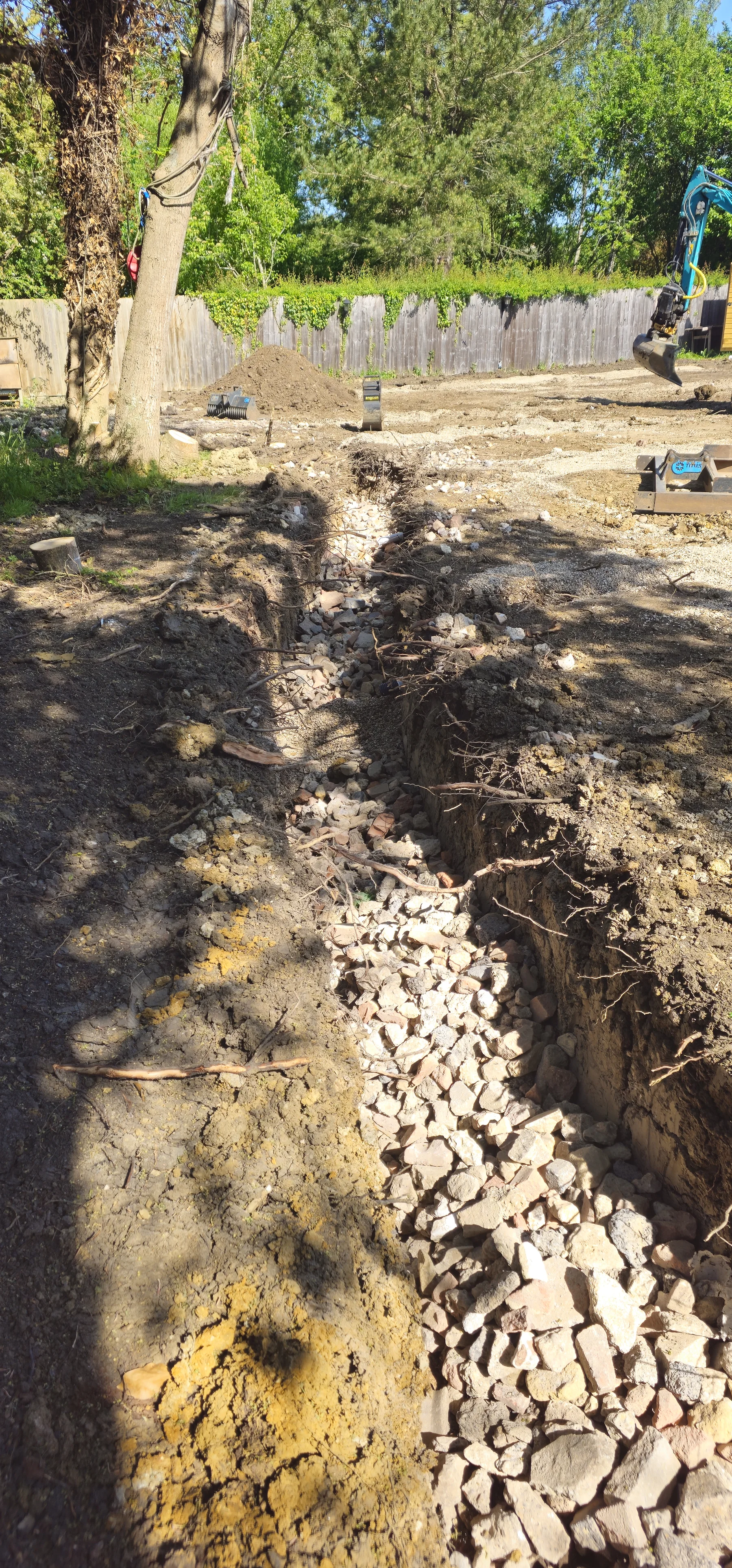
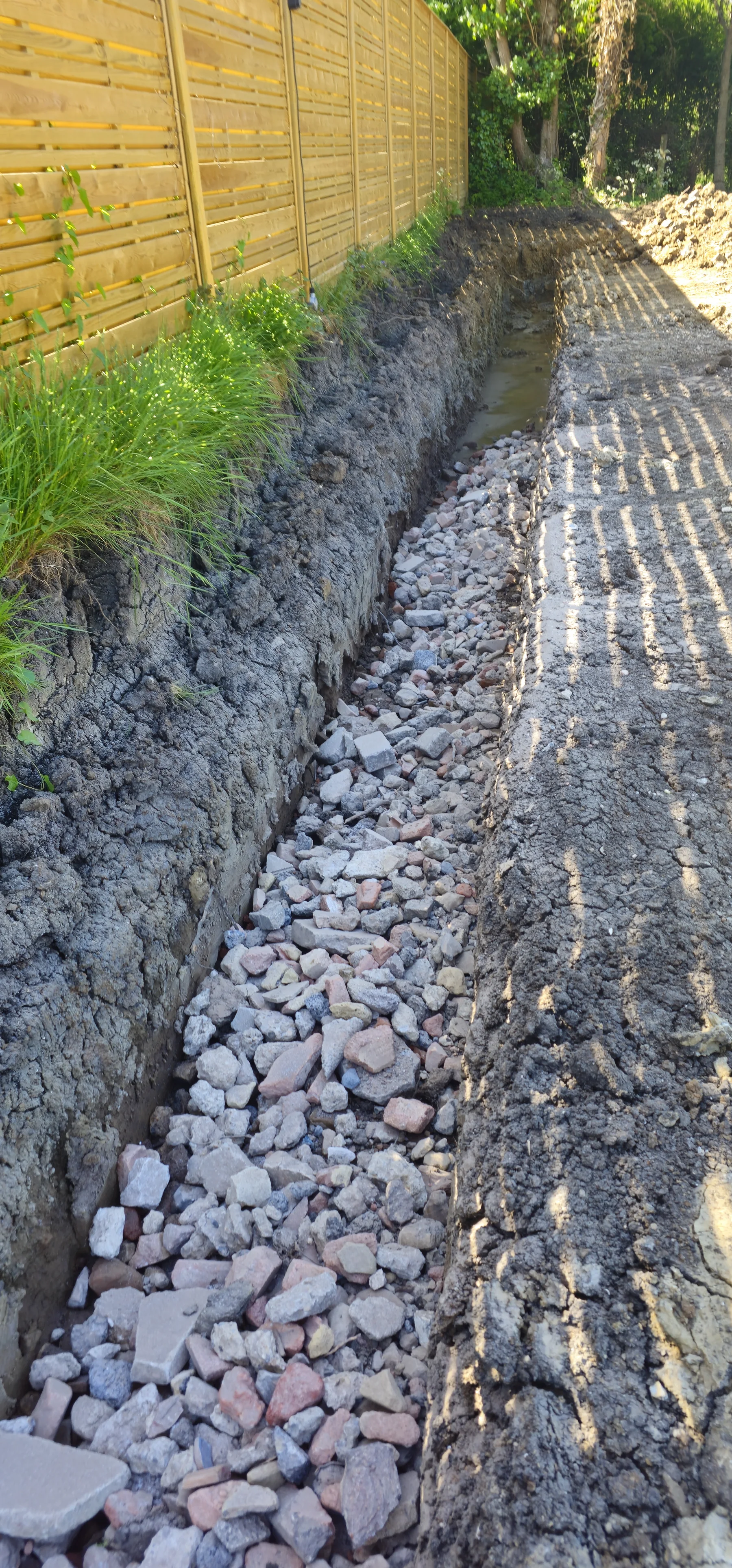
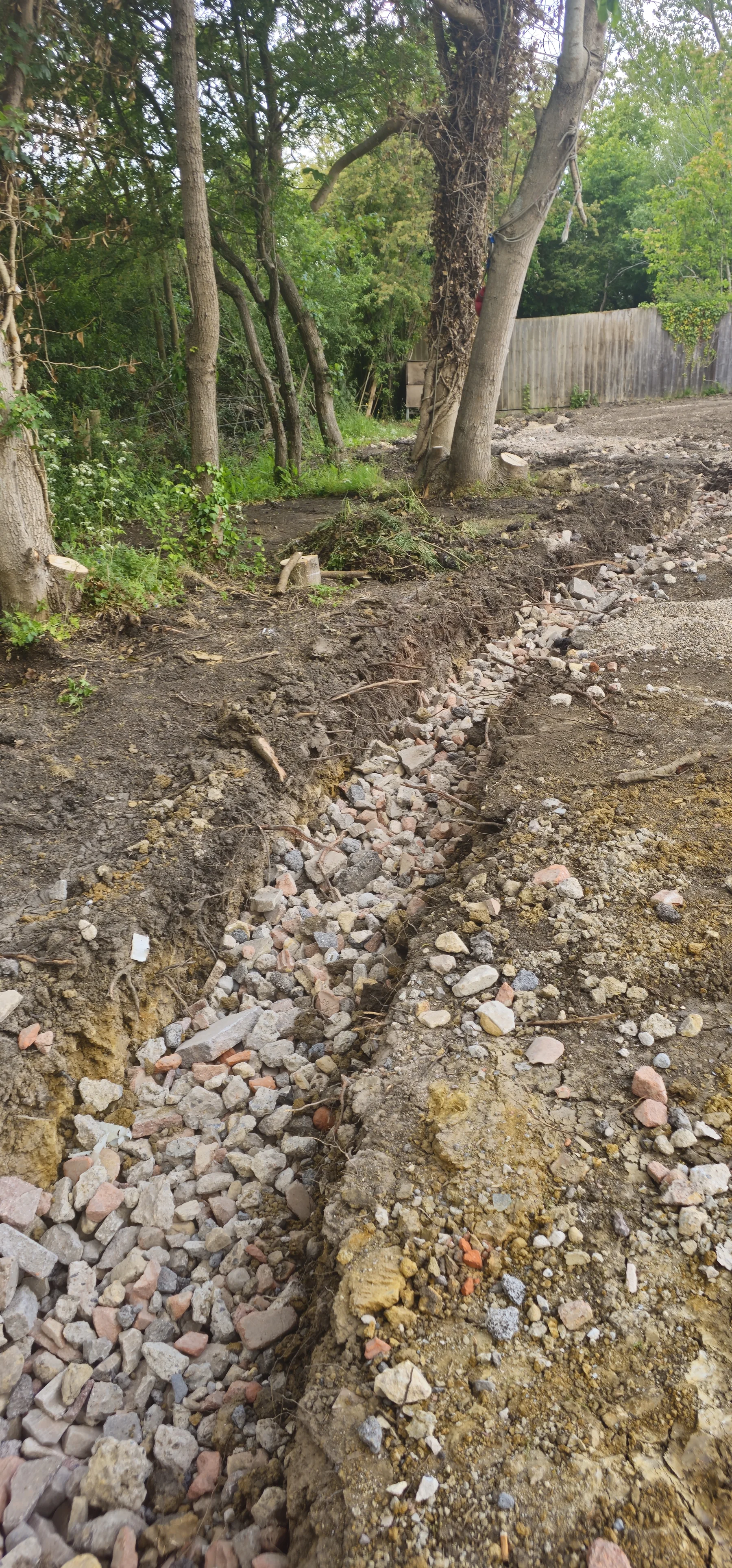
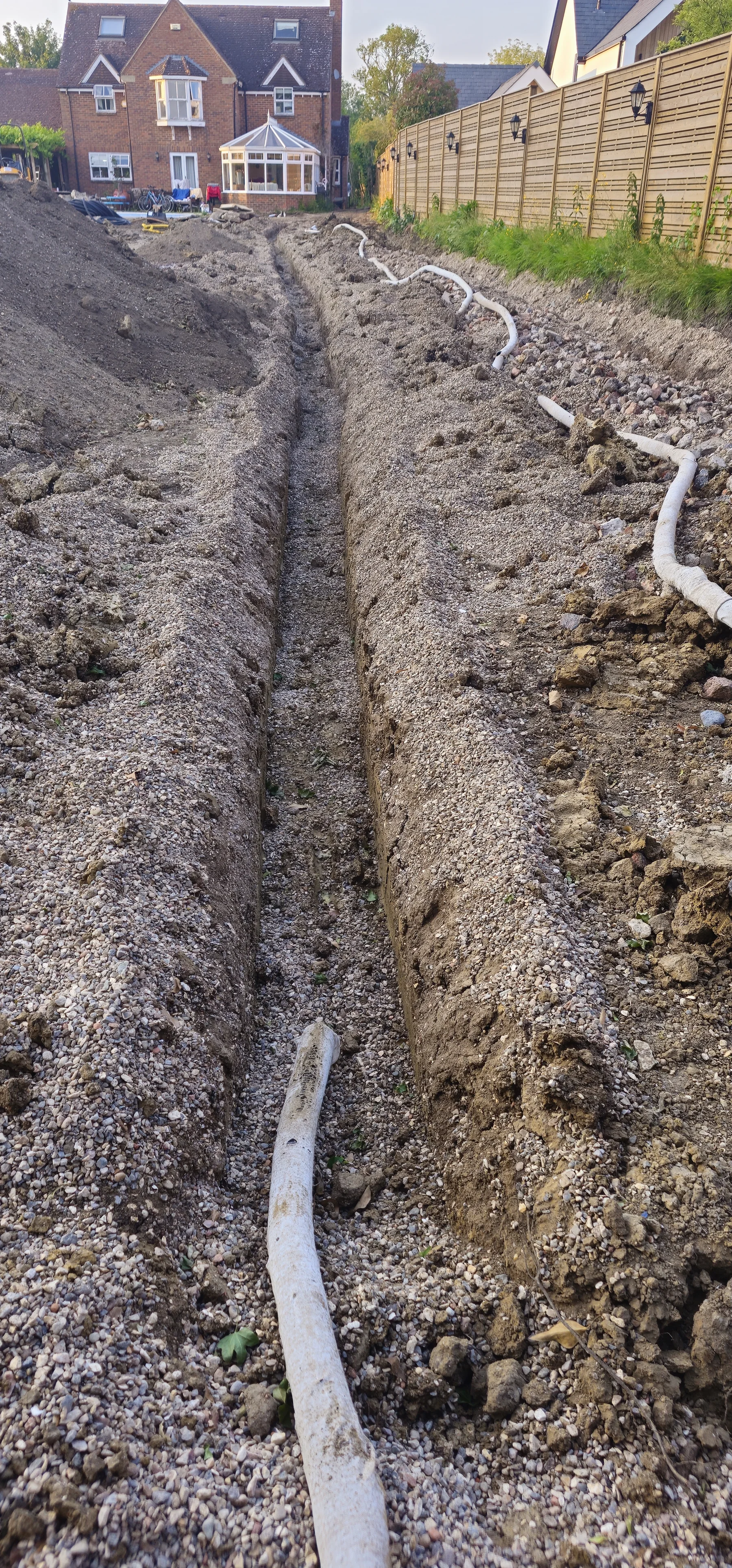
French drains, channels, soakaways or level corrections may be added where soil treatment alone cannot provide a complete solution.
Final grading, topsoil correction, seed or turf installation can follow after the ground has been prepared.
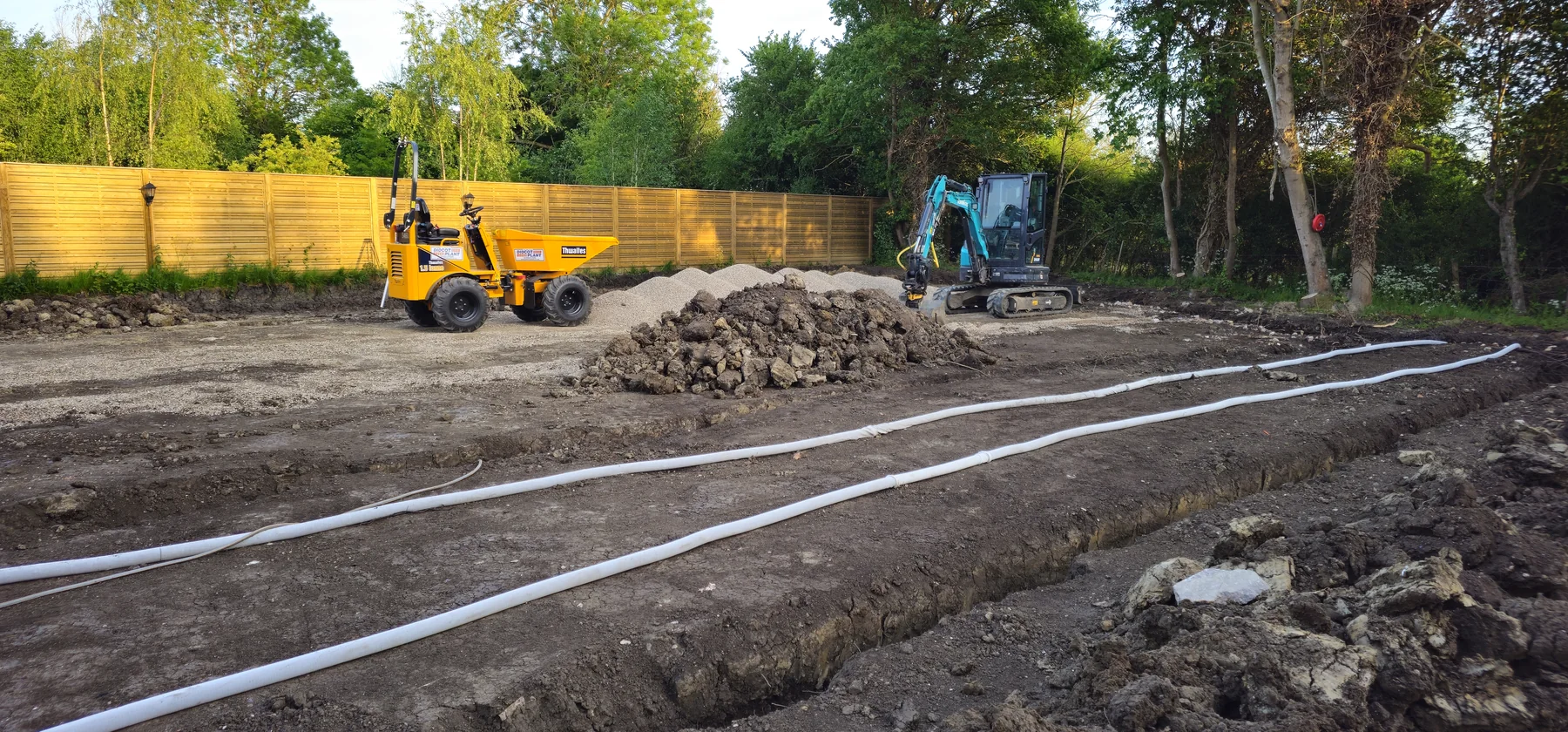
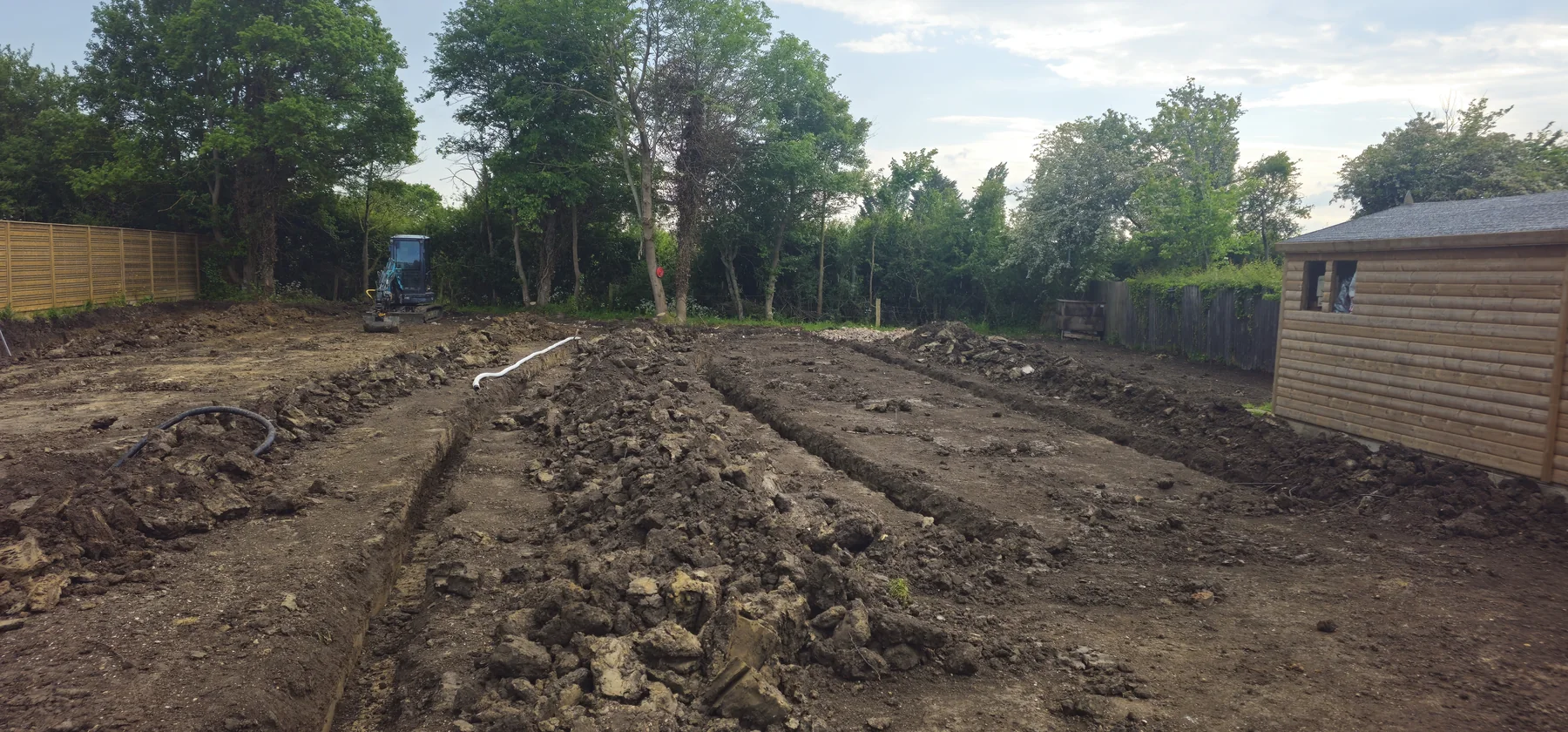
Drainage trenches, pipe routes, aggregate layers and deep ground preparation from a DesignLeaf project.
Send photographs of standing water, the lawn and surrounding levels together with the postcode and approximate area.